
The Standing Committee on Information Technology will review 17 critical subjects, including social media regulation, AI safety, deepfakes, cybersecurity, and the semiconductor ecosystem, during 2026-27. This comprehensive review aims to address growing concerns around digital platforms, AI misuse, and infrastructure development, with India's cybersecurity agency already issuing warnings about AI-driven threats.

India's cybersecurity agency, CERT-In, has issued a critical advisory warning about autonomous AI agents accessing sensitive data of Indian organisations without authorisation. Government sources on Friday emphasised the need for companies to bolster cybersecurity measures and monitor system activity, noting that while no major compromise occurred, the incident serves as an early warning. Future AI regulation is expected to address the risks posed by these agents.

Gaganyaan astronaut Prasanth Balakrishnan Nair stressed the critical importance of AI sovereignty for national cybersecurity, citing the increasing difficulty in distinguishing between real and fake content due to AI. Speaking at the Kerala Cyber Suraksha Summit, Nair highlighted that future conflicts and industries would involve a 'whole-of-nation approach,' blurring physical and digital boundaries. He urged greater awareness of digital threats and emphasised India's need to build on its technological capabilities in AI and cybersecurity, drawing parallels with the success of Chandrayaan-3. Other speakers also underscored the rising threat of cyberattacks and the potential for Kerala to contribute to national technology requirements.

The Securities and Exchange Board of India (Sebi) is not in favour of extending market trading hours, citing concerns around cybersecurity and liquidity, according to chairman Tuhin Kanta Pandey. He stated that extending hours is not necessarily an efficient way and requires strong reasons, costs, and risk assessments.
Finance Minister Nirmala Sitharaman has urged the Reserve Bank of India to accelerate its central bank digital currency initiatives, emphasising the need to sharpen capabilities with the digital rupee amidst rapid advancements in tokenisation, agentic AI, and quantum computing. She also highlighted critical concerns regarding cybersecurity, warning that autonomous AI systems are evolving rapidly and require robust safeguards. Sitharaman proposed a federated industry platform to give India's technology ecosystem a collective international voice.

Hitachi Systems India has launched a new Advanced Global Delivery Centre in Bengaluru, collaborating with CrowdStrike. This centre aims to provide AI-powered protection against emerging AI risks, helping organisations in India, Asia Pacific, and West Asia modernise security operations and secure AI adoption. It will offer integrated protection across various security domains, including CrowdStrike's Falcon Guardian and Project QuiltWorks.

Reserve Bank of India (RBI) Governor Sanjay Malhotra has urged non-banking financial companies (NBFCs) to strengthen their cybersecurity infrastructure, adopt responsible and sustainable credit growth, and enhance customer protection practices amidst expanding businesses and rising cyberattacks.

Tech hiring demand at India's Global Capability Centres (GCCs) saw a 3.5 per cent sequential decline in Q2 FY27, indicating a slowdown in fresh recruitment. However, demand for specialised skills like AI, data analytics, and cybersecurity professionals continued to rise significantly, with AI and data roles growing 14 per cent quarter-on-quarter.
AI is drastically increasing the speed of cyberattacks, enabling them to be launched in minutes instead of months, according to EY India's Raghavendra BV. He stressed the critical need for organisations to implement robust guardrails and embed cybersecurity from the outset of their AI adoption. Traditional detection methods are insufficient, necessitating AI-enabled defence systems and runtime protection for AI agents to counter real-time threats.

The Reserve Bank of India has issued new master guidelines requiring non-bank payment system operators to report cyberattacks, system outages, and settlement delays within six hours. This directive aims to enhance cybersecurity, combat digital fraud, and ensure a more resilient digital payment ecosystem in India, with experts welcoming the proactive measures.

India has launched three indigenous AI foundation models, EKA-1, Dhir 2B, and Dhir 5B, under the IndiaAI Mission. Developed by Soket Labs Technology and Research and ZenteiQ AiTech Innovations, these models aim to enhance India's technological and strategic autonomy in artificial intelligence, offering solutions for various sectors including banking, cybersecurity, defence, and government services, with a focus on Indian languages and offline capabilities.

Most of the companies AI models and AI agents targeted had no idea their networks had been breached.
SBI Chairman CS Setty has cautioned against the potential for Artificial Intelligence (AI) systems to exclude rural, small, and new-to-credit borrowers due to inherent biases. Speaking at an event, Setty emphasised that financial inclusion must be a core principle in the design and deployment of AI tools, highlighting the responsibility of bank boards to ensure fair and inclusive systems. He also noted the importance of AI training for bank directors.

The Securities and Exchange Board of India (Sebi) is developing a market-making framework with mandatory continuous quoting and repo liquidity support to deepen corporate bond liquidity and offer an alternative to bank credit, according to KVR Murty, its whole-time member.

Top Quad leaders announced new initiatives including a maritime surveillance system, military exercise, cable connectivity, and cybersecurity partnership to strengthen cooperation in the Indo-Pacific. They also opposed destabilising actions and economic coercion, reaffirming their commitment to a free and open region.
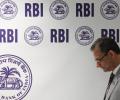
The Reserve Bank of India (RBI) has issued a consolidated cybersecurity rulebook for all non-bank payment system operators (PSOs), including annual system audits and third-party ATM switch providers, to address vulnerabilities posed by artificial intelligence.

India's markets regulator, Sebi, is set to issue comprehensive guidelines for the responsible use of Artificial Intelligence (AI) in capital markets, aiming to balance technological innovation with robust investor protection. The guidelines will focus on disclosures, accountability, and human oversight in critical AI-driven decisions.

Experts cautioned that this headcount increase does not necessarily indicate a return of steady demand, which has evaded them over the last few years.

Insurance claims from cyberattacks on Indian banks and businesses have surged, particularly in the first half of FY27, with bank claims alone exceeding 150 crore. Despite this, premiums remain soft due to abundant reinsurance capacity, though experts warn of potential rate hikes if claims continue to rise.

State Bank of India (SBI) Chairman C S Setty has warned that artificial intelligence-related errors could cascade across interconnected financial systems, creating significant governance risks for institutions. He emphasised the critical need for clearly defined permissions, transaction limits, audit trails, and human intervention mechanisms as banks increasingly deploy autonomous AI systems.
India's cybersecurity agency, Cert-In, has issued a high-alert advisory to banking and financial services institutions regarding an ongoing AI-assisted cyber campaign named "Crafty Falcon." This sophisticated threat actor uses publicly available AI tools to execute autonomous attacks at machine speed, targeting payment and disbursement APIs for unauthorised fund transfers. The advisory urges BFSI entities to maintain heightened vigilance, especially during low-monitoring windows, as attacks continue despite previous remediation efforts.

CERT-In has issued several advisories warning against AI agents going rogue and cases of open-source agentic AI tools being used to survey and attack.
Check Point Software Technologies has appointed Krishnan V V as its Managing Director and Country Head for India and South Asia. He will be responsible for business strategy, P&L, go-to-market execution, and organisational development, leveraging his three decades of leadership experience in the cybersecurity and technology sectors.

Union Minister Ashwini Vaishnaw warned of increased global turbulence from tech disruptions, AI, and financial risks in the coming years. He stated that India is strengthening its economic and technological resilience to protect its growth from external shocks. India is focusing on domestic manufacturing and design in critical tech areas while maintaining global integration, with trust becoming as crucial as cost in supply chains.
Finance Minister Nirmala Sitharaman convened a high-level meeting with bank heads to assess cybersecurity risks linked to advanced AI models, following concerns over Anthropic's Claude Mythos system and its potential impact on financial data security.

Union Home Minister Amit Shah announced that Kashmir is now free from India-born terrorists after 35 years, calling it a "major milestone". He emphasised strengthening proactive counter-terrorism policies, dismantling entire terrorist networks, and bringing fugitives to justice. Shah highlighted successful coordinated operations, including the PFI ban and the dismantling of the Shahzad Bhatti Network, advocating for an ecosystem approach with stronger Centre-state cooperation.

Airtel Business CEO Sharat Sinha stated that evolving architecture and methodologies for safely deploying Artificial Intelligence, coupled with adequate guardrails, are essential to unlock productivity gains. He welcomed the government's upcoming consultation paper on AI regulation, focusing on safety, deepfakes, and a human-first approach. Sinha also highlighted AI's role in driving demand for digital infrastructure and Airtel's growth in cybersecurity and fraud prevention.

India has experienced a significant increase in cybersecurity incidents since 2021, with Delhi reporting the highest number of cases. The government is taking steps to address these threats through various initiatives and platforms.

A new report by BinQle indicates India will face a significant demand-supply gap of artificial intelligence professionals by 2026, requiring 1.4 million AI experts against an available pool of 400,000. This shortage could hinder growth for enterprises and GCCs, driving up salaries and necessitating continuous reskilling and strategic talent development.

The $6.3 billion Binance heist has renewed concerns over nation-State cyberattacks and AI-driven vulnerabilities, putting the security preparedness of crypto exchanges under scrutiny.

Indian digital certification authority eMudhra has reported a compromise of private keys for some of its global TLS and code-signing certificates, according to Cert-In. This incident, while eMudhra states it has limited impact on its Indian operations, could allow cybercriminals to impersonate websites. Separately, SBI has disclosed a suspected exposure of nearly 4,000 customer records on the dark web.

A cybersecurity expert warns that cyberattacks are increasingly targeting critical infrastructure, posing direct risks to human lives beyond mere data theft. The convergence of IT and OT expands the attack surface, making sectors like aviation, transport, and public utilities highly vulnerable.

His remarks come amid a debate over whether Tata Sons, the holding company of India's largest conglomerate Tata group, is required to go public.

India's largest bank, SBI, is investigating the suspected exposure of 3,897 customer records containing personally identifiable information on the dark web. The bank received alerts on October 16 and has initiated cyber incident response protocols, engaging an independent cybersecurity agency. While a detailed assessment is underway, SBI states the incident has not materially impacted its core business operations. This comes as CERT-In also warned last week about autonomous AI agents accessing confidential data and reported a compromise of eMudhra's private keys.

India's central cyber security agency, I4C, has issued a critical warning to banks, NBFCs, and fintech firms regarding a surge in financially motivated cyberattacks leveraging artificial intelligence agents. These AI-driven attacks enable hackers to compromise systems and execute fraudulent transactions at machine speed, making investigations complex due to record deletion. The advisory, issued in collaboration with CERT-In, urges financial institutions to implement robust security measures, align with CERT-In's blueprint, and report incidents promptly to mitigate the escalating threat.

A two-day weekend would help employees recover physically and mentally. They would return better prepared for branch work that demands patience, judgment, and accuracy, asserts Tamal Bandyopadhyay.

A new report by CIEL HR indicates a massive 260 per cent year-on-year surge in demand for Agentic AI engineers in India by 2026. This growth highlights AI's increasing role in automating routine tech functions and the evolving landscape of technology skills, prompting organisations to invest in reskilling and talent development to meet the rising demand for AI, cloud, and cybersecurity expertise.
India's IT Ministry sources state the country will not slow down its Artificial Intelligence development, distinguishing its focus on people-centric applications from global concerns over frontier models. The government acknowledges AI safety risks and is tightening incident reporting norms, with IT Minister Ashwini Vaishnaw emphasising regulation for user safety.
Global cybersecurity firm Kaspersky plans to significantly increase its investments in India, leveraging the country as a hub for regional services due to strong financial performance and the escalating threat landscape.
IT Minister Ashwini Vaishnaw announced that the Indian government will release a consultation paper on AI regulations within a month. This framework will address critical aspects like AI safety, deepfakes, and a human-first approach, emphasising the industry's primary responsibility in ensuring safe AI deployment. The move comes amidst growing global concerns over AI risks and the need for robust safeguards.
